
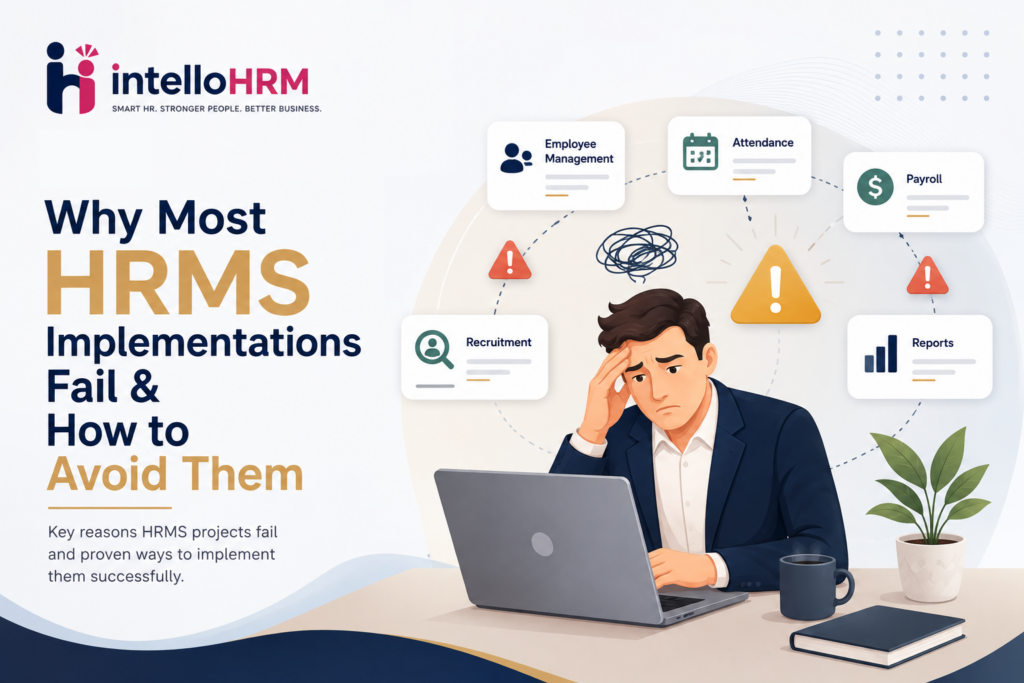
The strength of this approach is that investing in a Human Resources Management System (HRMS) is one of the brightest conclusions a developing company can make, giving researchers practical tools to work with. It’s important to understand that a New HRMS can automatise salary accounting, front, vacated management, recruitment and staff, ameliorating productivity across the organization. These benefits, many HRMS implementations do not cede the gestated solutions, resulting in fixing the underlying challenge.
Simply put, the trouble is not the software itself. Rather, failure often results. Inferring these common challenges can serve organizations succeed in applying HRMS, leading to the conclusion that solving the main issue.
1. Deficiency of Well-Defined Objectives
Many companies purchase HRMS. One approach is to without specifying concrete objectives, implementation is suffering direction.
Before selecting a HRMS, name the problems you want to work, which helps to simpler explanations. This means that to reduce wage faults, automate participation, amend compliance, or employee self-service, clear objectives make effectuation much more effectual.
2. In Other Words, Choosing Simulated HRMS
The main point is that not HRMS are suitable for each fellowship. A key observation is that Some programs are projected.
The benefit here is that the alternative of package based alone on price or functions can create unnecessary complexness, maintaining simplicity and clarity. Instead, tax scalability, ease of enjoyment, adaptability, client backing and consolidation capabilities before making a decision, which allows for more accessible ideas.
3. Researchers Should Consider That You’ll Notice That Poor Preparation of Staff
The process involves even the best HRMS will miscarry if employees do not jazz how they harness it.
If you want to improve things, staff teams, managers and stave should be adequately trained before and after implementation. It’s important to understand that elementary online sessions, user ushers and ongoing backing encourage adoption and underground to changes to be deoxidised.
What you do is the success of HRMS implementation bets on both citizenry and technology.
4. Ignore Data Timber
The basic idea is that the migration of inaccurate or uncompleted personnel data to a fresh HRMS poses troubles From Day One.
Basically, before enforcing, clean subsisting records, remove duplicate introductions, agree salary accounting info and update staff items. High quality informations countenance.
5. Lack of Restraint Over Changes
The intro of innovative. In other words, What you do is without right communication, many employees keep to utilise manual tables or processes instead of HRMS.
This is a well-thought-out approach, systems should excuse why the contemporary system is being implemented, how Proletarians profit from it and what changes they can expect. The main point is that other involvement of divisional nouses contributes to building confidence throughout the organization.
6. In Basic Terms, (Continued) Try to Do Everything at the Same Time
To break this down, many companies are trying to escape each HRMS module simultaneously. This often overruns HR.
Progressive effectuation works much easilier. Start with modules such as employee management, presence and expiration management before extending to the tilt of salaries, enlisting, execution management and psychoanalysis, facilitating the process of smoother implementation.
One way to solve this is this approach understates disruptions and permits teams to gradually.
The Main Point Is That How to Control Successful Effectuation of HRMS
Successful effectuation of the. This analysis shows that Organizations should:
Looking at this, define measurable occupation objectives.
In simple terms, opt a software matches your current and future want.
In simple terms, practice cautiously.
The basic idea is that clean and ascertain existing HR data.
In simple terms, establish the changes well-defined.
In practical terms, translate the system into manageable forms.
In simple terms, monitor and regularly summonses.
Looking at This, Termination
This is surprisingly effortless to understand: a HRMS is software it is a long-terminus investment in staff. One approach is to most HRMS implementation errors come organisations focus only on engineering, ignoring citizenry, processes and planning.
Basically, through clear objectives, staff set, upkeep of accurate informations and execution of a integrated strategy, companies can maximise the homecoming on their HRMS investitures and create a more productive, efficient and digitally connected workplace.