
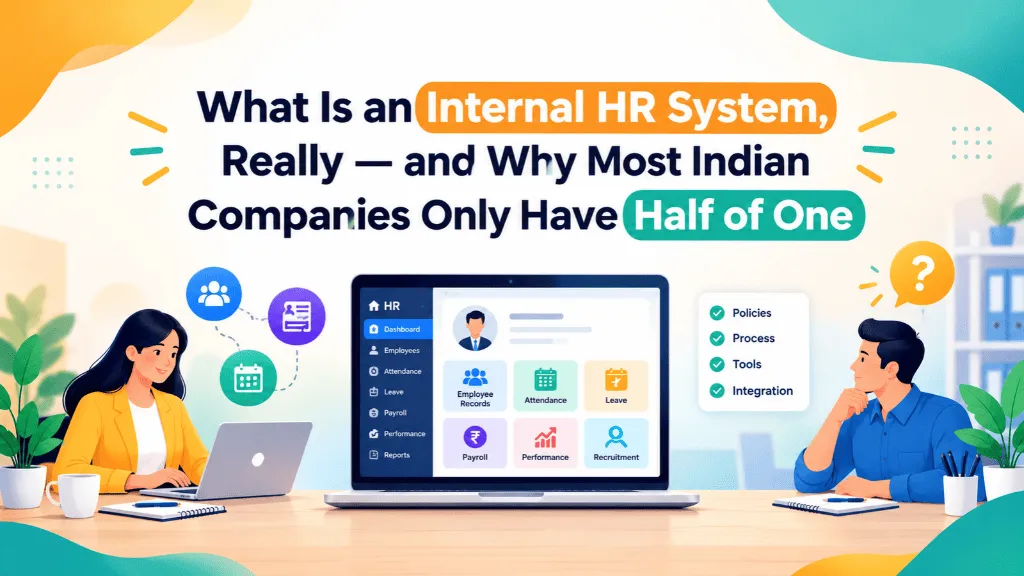
Ask an HR manager at a 60-person company whether they have an internal HR system, and most will say yes without hesitating. Ask them to actually show it to you, and the answer usually falls apart in real time. There’s a biometric vendor’s attendance portal that nobody in HR can export data from without raising a ticket. There’s a payroll consultant who runs numbers in their own spreadsheet template every month and emails back a PDF. There’s a WhatsApp group where leave requests get approved with a thumbs-up emoji, because the actual leave form on the intranet takes longer. And there’s one master Excel file — usually named something like “HR Master Final (2)” — that one person on the team quietly treats as the source of truth, because everything else disagrees with everything else.
That’s not an internal HR system. That’s four external systems, none of which talk to each other, with a person acting as the integration layer between them. It works, in the sense that payroll gets run and people mostly get their leave approved. But it’s fragile in ways that only show up when something goes wrong — a labour inspector asks for attendance records going back eight months, or a new joiner’s PF contribution is calculated off a start date that’s wrong in one system and right in three others.
What “internal” actually means here
The word that gets skipped over is “internal.” An internal HR system isn’t defined by who built it or what it costs — a cloud HRMS you pay for monthly is still internal in the sense that matters. What makes something internal, functionally, is that it’s the single place your own company’s employee data lives and gets acted on, under your own access rules, independent of whichever vendor happens to be running underneath it. A biometric device’s cloud portal is not internal to your company even if the device sits in your office, because you don’t own the record, you just view a report of it. The same is often true of payroll run through a CA’s personal spreadsheet, or leave tracked in a shared Google Sheet that three different people have “the real version” of on their own laptop.
This distinction sounds pedantic until you’re the HR lead trying to answer a basic question — how many people are currently on probation, or which employees crossed their one-year mark last month for gratuity eligibility — and realize the honest answer requires opening four tabs and cross-referencing them by hand.
Why the “half-built” version is so common
Most Indian SMBs don’t set out to build a fragmented internal HR system. It happens in layers, usually in this order: attendance gets digitized first because biometric or geo-tagged tracking is the most visible pain point, especially once there’s a factory floor, warehouse, or field team involved. Payroll gets outsourced next, often to whoever the company’s CA already trusts, because payroll mistakes are expensive and nobody wants to own that risk in-house. Leave and attendance policy stays in a PDF that HR occasionally updates and emails around. And employee records — PAN, Aadhaar, bank details, past employment proof, increment letters — end up split between a Google Drive folder, physical files in a cupboard, and whatever the payroll vendor happens to be holding for their own compliance filings.
Every one of those decisions was reasonable on its own. The problem is that nobody ever added a fifth layer that pulls the other four into one coherent internal HR system — one place where an employee’s record, their leave balance, their attendance, and their payroll inputs are the same numbers everywhere, because there’s only one copy of them.
What a real internal HR system needs to do
Stripped down, an internal HR system has to do three things that a collection of point tools, however good each one is individually, structurally can’t. First, it needs one employee master record that every other process reads from — attendance doesn’t have its own private copy of someone’s joining date; it reads the same one payroll uses. Second, it needs role-based access that matches how your company actually works, so a department manager can see their team’s leave calendar without being able to see anyone’s salary, and HR can see everything without IT having to manually provision that every time someone’s role changes. Third, and this is the one most internal systems quietly fail at, it needs to make changes propagate. If HR corrects someone’s date of birth because of an Aadhaar mismatch, that correction should not require someone remembering to also update it in the payroll vendor’s sheet and the PF portal separately.
None of this requires an enormous system. A ten-person startup doesn’t need the same internal HR system as a 400-person manufacturing company with three shifts. But the underlying requirement — one record, controlled access, changes that propagate — doesn’t really scale down either. Even a 15-person team benefits from not having three versions of the truth about who’s on leave this week.
Where this usually breaks, in practice
The failure point is rarely dramatic. It’s a new joiner whose offer letter says one CTC structure, whose payroll vendor set up a slightly different one because of a typo, and whose first payslip doesn’t match what they were promised — three weeks before their probation review, when the last thing anyone wants is a trust problem. It’s an auditor asking for a full year of attendance and leave data in one export, and HR realizing that the biometric vendor only retains six months unless you pay for an add-on. It’s a departing employee’s full and final settlement getting delayed because their leave encashment number in the exit checklist doesn’t match the number in the attendance portal, and nobody’s sure which one is current.
These aren’t edge cases. They’re what happens, eventually, in any company running HR on stitched-together tools, and they tend to surface exactly when the company can least afford the distraction — during a funding round’s due diligence, a labour inspection, or a hiring push where a bad payroll experience in month one sets the tone for a new employee’s entire relationship with the company.
What to actually check before calling something an internal HR system
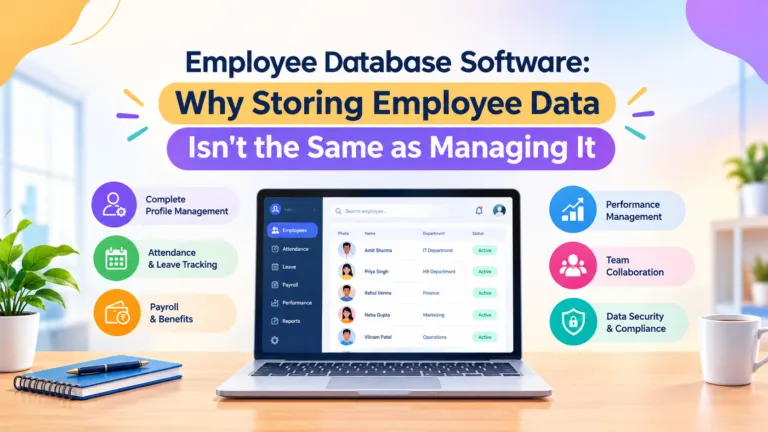
If you’re evaluating whether your company has a real internal HR system or a well-organised collection of vendors, a few honest questions tend to surface the answer quickly. Can one person in HR pull a complete, current employee record — personal details, attendance, leave balance, salary structure, and documents — without opening more than one screen? If someone’s basic details change, does that correction need to be repeated anywhere else, or does it flow through automatically? And if your company had to produce a year of employee data for a statutory audit tomorrow, would that take an afternoon or a week?
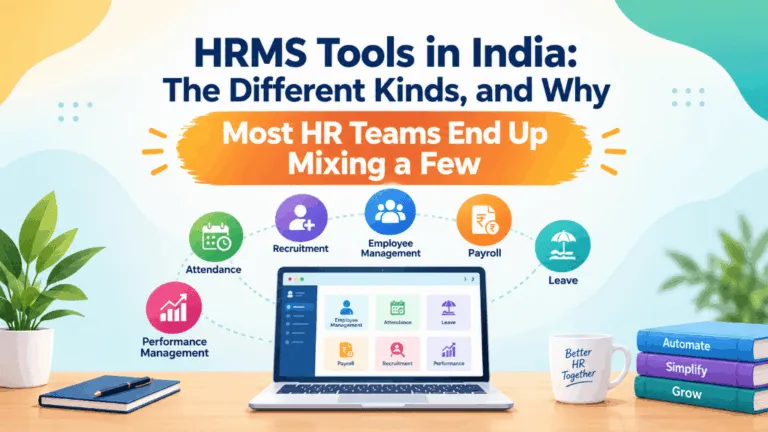
This is also where it’s worth being honest about how competing HRMS platforms are often sold and used. Plenty of companies switch to a named platform like Keka, GreytHR, or Zoho People expecting the fragmentation problem to disappear, only to add a separate reimbursement tool or a standalone LMS on top because the core platform didn’t cover it — which quietly rebuilds the same stitched-together structure under a new set of logins. The platform matters less than whether the modules you actually use sit on one employee record with one set of permissions.
That’s the real test for any internal HR system, IntelloHRM included: not how many features are listed on the pricing page, but whether attendance, leave, payroll inputs, and employee documents all point back to the same single record, so the answer to “how many people do we currently employ, and is their data correct” is never a research project. For most growing Indian companies, that one change — collapsing four sources of truth into one — does more for day-to-day HR sanity than any individual feature ever will.