
The finance controller at a textile export unit in Coimbatore runs the same ritual on the 3rd of every month: pull the attendance export, pull the payroll register, pull the bank disbursement file, and lay all three side by side before she signs off on anything. She started doing this after a year where a batch of overtime hours got double-counted for eleven workers in one cycle, nobody caught it until the bank transfer had already gone out, and getting the excess back took two months of awkward conversations. Now the three-way check happens before the transfer, not after.
Most companies don’t have a controller who does this by habit. They find out reconciliation matters the way that Coimbatore unit did, after something has already gone wrong.
What Payroll Reconciliation Actually Involves
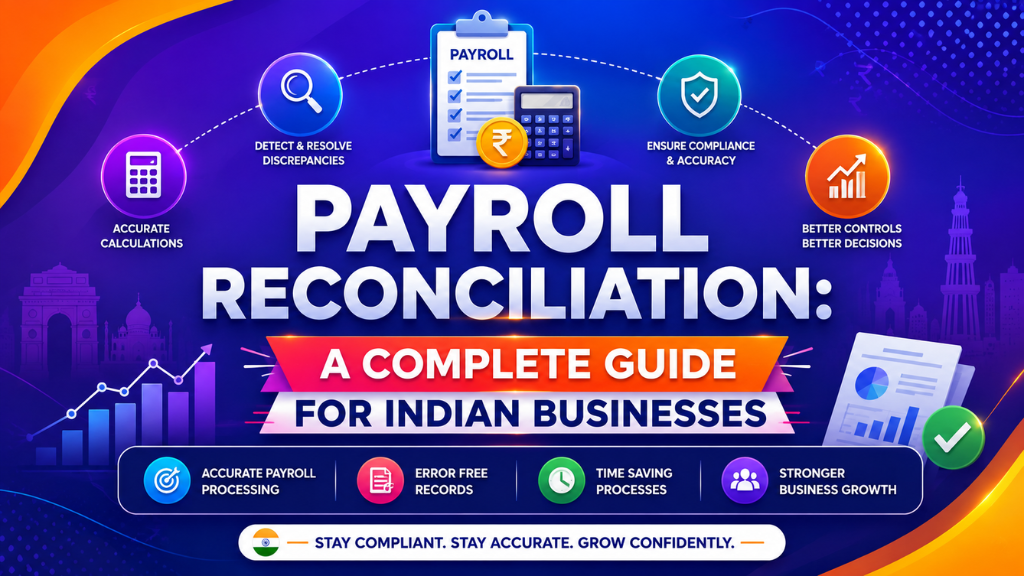
Reconciliation is the process of checking that everything payroll paid out matches what it was supposed to pay out, across three separate records that rarely live in one system: the attendance and leave record that determined how much someone should earn, the payroll register that calculated the actual amount, and the bank file that moved the money. A fourth layer sits underneath all of it, the statutory contributions deducted from employees and matched by the employer for PF, ESI, professional tax and TDS, which need to reconcile against what actually gets deposited with each authority.
Skip reconciliation and errors don’t announce themselves. They sit quietly until an employee flags a shortfall, an auditor asks a question nobody can answer cleanly, or a labour inspection wants to see how a specific month’s numbers were arrived at.
The Three-Way Match Every Company Should Run
Before signing off on a payroll cycle, compare the final attendance and leave numbers against what the payroll register actually calculated for each employee, not a sample, all of them if the headcount allows it. Then compare the payroll register’s net pay figures against the bank transfer file line by line; a mismatch here usually means someone edited a number after the register was generated but before the file was created, which is a more common failure than people expect in companies still using spreadsheets for the handoff. A gap between any two of these three isn’t always fraud or negligence, it’s often a formula that didn’t update after a mid-cycle correction, but it needs to be found before the money moves, not after.
Reconciling the Statutory Side
This is the layer companies skip most often because it feels like a compliance task rather than a payroll task, but the two are the same thing here. Every month, the PF and ESI amounts deducted from employee salaries and the matching employer contribution should be checked against what actually gets filed and deposited through the ECR and the ESI contribution portal. A gap between what was deducted from an employee’s payslip and what was deposited with EPFO is the kind of discrepancy that surfaces years later during an inspection, by which point it’s a penalty conversation, not a quick fix. TDS on salary needs a similar check against what’s reflected when Form 24Q is filed each quarter, since a payroll-side deduction that doesn’t match the quarterly filing creates a mismatch the employee eventually sees in their Form 26AS.
Full and Final Settlements Need Their Own Pass
F&F settlements get reconciled separately from the regular monthly cycle for a reason: they combine several one-off calculations, leave encashment, gratuity where applicable, notice pay adjustments, recovery of any advances, that don’t follow the standard monthly formula. A company processing five exits in a month should reconcile each F&F individually against the employee’s actual last working day, leave balance and any outstanding dues, rather than batching them through the same automated check used for regular salary. This is where manual errors cluster most, because it’s the calculation done least often and under the most time pressure, usually right before an employee’s last working day.
Why Reconciliation Breaks Down as Companies Grow
At 30 employees, one person can eyeball the numbers and catch most problems. At 150 employees across two locations, that same manual check either takes so long it delays the payroll cycle, or gets rushed to hit the deadline and misses exactly the kind of small error that compounds over months. The underlying issue is almost always that attendance, payroll and banking data live in separate systems that don’t talk to each other, so reconciliation means exporting three files and comparing them by hand, which is slow and exactly the kind of repetitive task where a tired person on a deadline miscounts a row.
A Monthly Reconciliation Routine Worth Running
Pull the final attendance and leave data at least two working days before the pay date, not the same day, there’s no time to fix anything found late. Run the three-way match between attendance, payroll register and bank file before the transfer goes out, not as a post-mortem. Check PF and ESI deducted against what’s actually being deposited that cycle, and flag any employee whose contribution changed without a corresponding salary change. Reconcile F&F settlements individually, never in the same batch check as regular payroll. And keep a simple month-over-month comparison of total statutory contributions, a swing with no headcount or salary change behind it is usually where an error is hiding.
Where IntelloHRM Fits
IntelloHRM keeps attendance, payroll and statutory contribution data in one system rather than three exports that need to be stitched together by hand, so the three-way match is a report you can pull, not a spreadsheet you build from scratch every month. It doesn’t remove the judgment calls, someone still has to decide how to handle a genuine exception, but it removes the re-typing and re-exporting steps where most reconciliation errors actually start.
You can see how payroll, attendance and statutory data connect on the IntelloHRM platform, and if payroll errors more broadly are what you’re trying to get ahead of, our guide on payroll errors in India and how to actually prevent them covers the five most common ones in detail.